The C9000-L series, does not support Catalyst Center, and has lower stackwise Speeds.
Two Tier Collapsed Core
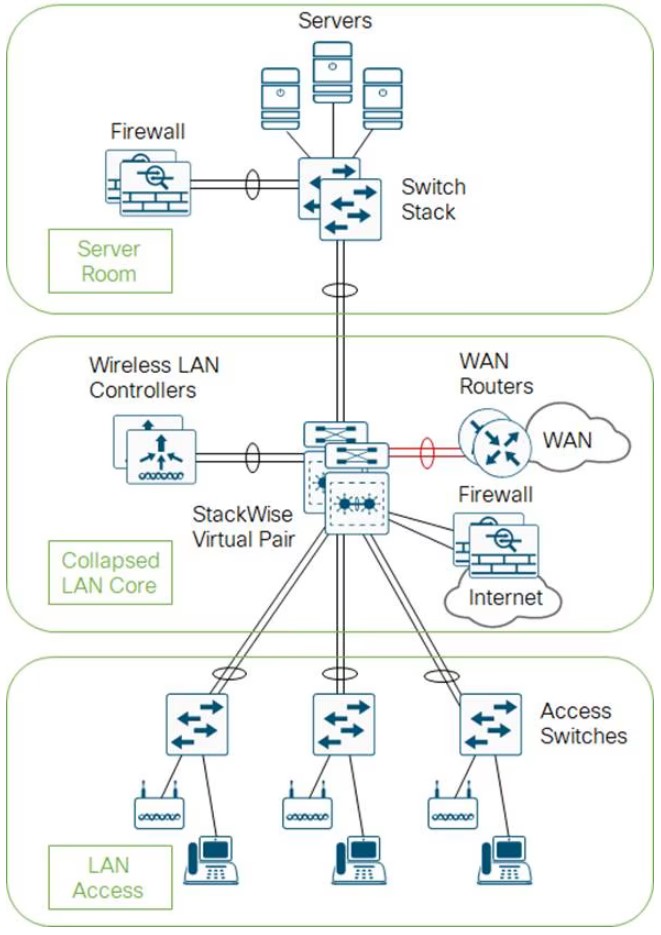
- The core and distribution switches are the same
- The center is running StackWise Virtual
Three Tier
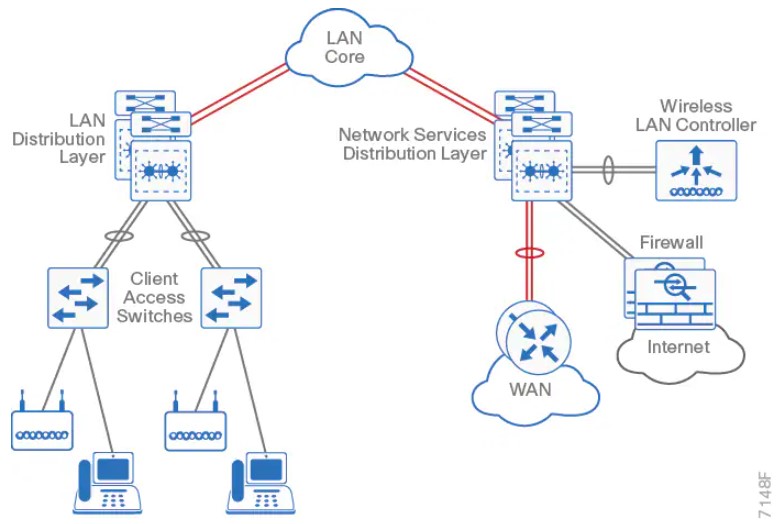
Layer 2 Access with traditional multilayer
- Layer 2 is a single wiring closest, or access uplink pair.
- FHRP is used, but limits bandwidth to one uplink, vs both.
The Campus Network
- Campus networks are always oversubscribed.
- Over-subscription rates between 4-20 are common.
- Networks with over-subscription that results in queuing should implement QoS for voice traffic.
Access Layer
- 9200 (160Gbps stack-wise ring)
- 9300 (480Gbps stack-wise ring)
- 9400 (modular chassis)
Considerations
- mGig, so access speeds can scale
- UPOE+, 90W with perpetual power (survives reboots)
Distribution Layer
- 9400 (modular chassis)
- 9500
- 9600 (modular chassis)
Considerations
- Service heavy (FHRPs, Routing, SVIs)
- Typical L2 boundary
- Used to interconnect all the access layer switches in a building
- Used to interconnect Access layer switches, once they can't form a full-mesh
- Also contains the failure domain of the access layer.
- Simplified Distribution, using stackwise virtual to remove FHRP.
Core Layer
- 9500
- 9600 (modular chassis)
Considerations
- No services
- Layer 3 only
- Always on
- Ideally, a minimum of 100G to conserve ports.
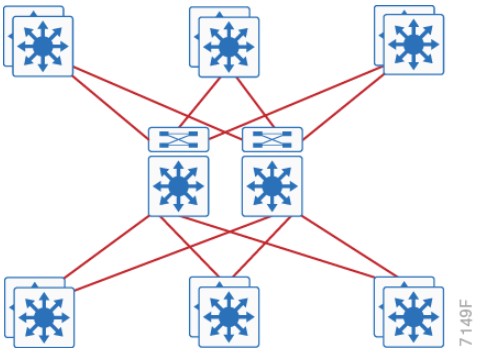
Traditional Design
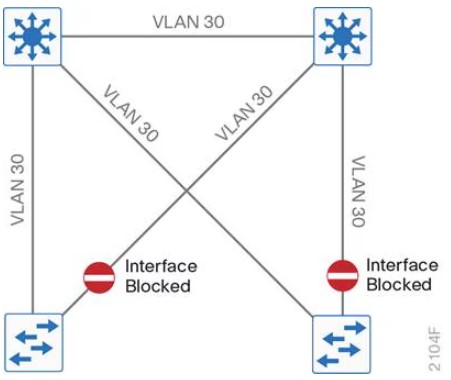
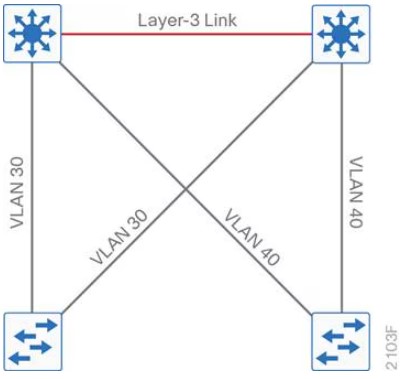
- Needs STP to block ports
Traditional Design - Loop Free
Other Designs
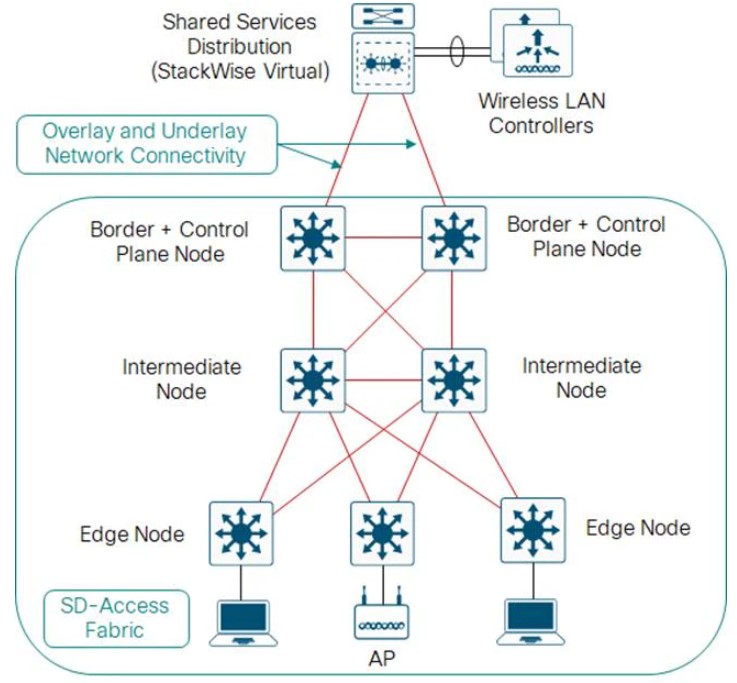
SD-Access
- Cisco Catalyst Center
- Cisco Identity Services Engine
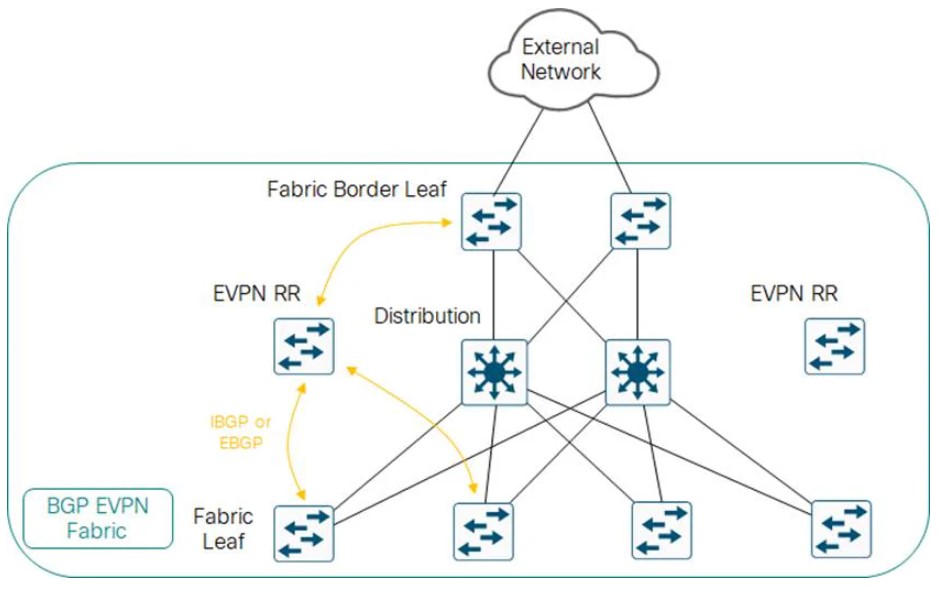
Open Standards Based Overlay
- MP-BGP
- VXLAN
Campus LAN Best Practices - Security
-
DHCP Snooping, to prevent users from hooking up a DHCP server from home on accident.
-
Dynamic ARP inspection, to prevent a ARP attack, where the attack sends ARP replies with the IPs in the subnet.
-
BDPU Guard, to prevent home switches.
-
802.1x, port authentication
-
Cisco Umbrella, Cisco's DNS offering.
Campus LAN Best Practices - High Availability
-
SSO: Stateful Switch Over, used to sync RPs in modular switches.
-
NSF: Non-Stop Forwarding allows graceful restarting of a L3 protocol. Allows the data-plane to continue while the new RP
-
MLS: Multi-layer Switch.
-
StackWise: Older tech, to combine switches together. Up to 8 switches can be stacked. They operate as one switch.
-
StackWise Virtual: Two MLS devices, are combined to become one logical device.
-
StackWise Virtual Link: The control/data path between the two switches. Should be two links minimum.
-
GIR: Graceful Insertion or Removal. Influencing paths by changing route-metrics or adjusting FHRP priorities.
Etherchannel
- Use a dynamic protocol, to check on link health
References
https://www.cisco.com/c/en/us/td/docs/solutions/CVD/Campus/cisco-campus-lan-wlan-design-guide.html